





When you’re shopping for a full-size SUV, cargo space can make all the difference. Especially for growing families, road-trip enthusiasts, and drivers who want their vehicle to be flexible enough to handle anything life throws their way. Two of the most popular models in the segment, the Chevrolet Tahoe and the Chevrolet Suburban, both deliver impressive versatility, but they deliver different things when it comes to interior space.
If you’re wondering which SUV offers the cargo capacity you need for daily errands around Greenwood or weekend getaways across the Carolinas, you’re in the right place. In this guide, we’ll break down the key differences in size, storage, and usability between the Tahoe and Suburban to help you decide which model is the better fit for your lifestyle.
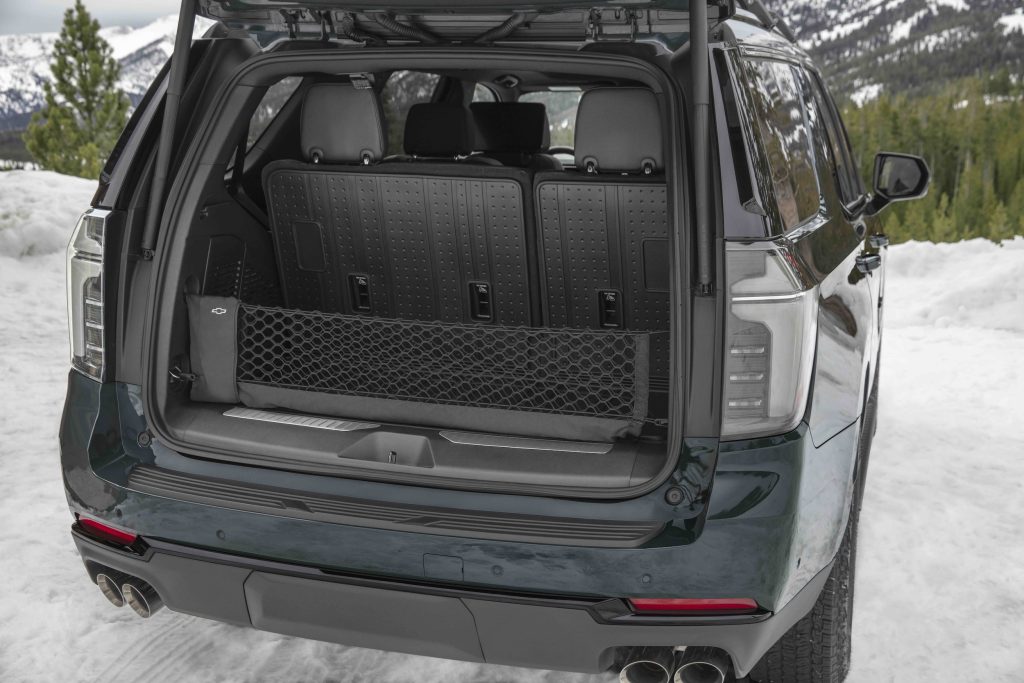
Chevy Tahoe vs. Chevy Suburban Dimensions
Here are the dimensions for both the Tahoe and Suburban:
2026 Chevy Tahoe
- Length
- 211.3 in.
- Width
- 81 in.
- Height
- 75.8 in.
- Seating Capacity
- 8
- Legroom (Front/Second/Third)
- 44.5/42/34.9 in.
- Cargo Volume (Standard/Max)
- 25.5/122.7 cu. ft.
- Wheelbase
- 120.9 in.
- Max Towing
- 8,400 lbs
2026 Chevy Suburban
- Length
- 226.3 in.
- Width
- 81 in.
- Height
- 75.6 in.
- Seating Capacity
- 8
- Legroom (Front/Second/Third)
- 44.5/42/36.7 in.
- Cargo Volume (Standard/Max)
- 41.5/144.5 cu. ft.
- Wheelbase
- 134.1 in.
- Max Towing
- 8,200 lbs
As you can see, the Chevy Suburban offers a larger cargo volume and more space in the third row. This makes the Suburban a great option if you need maximum space for sporting gear, groceries, strollers, or other large items. It is also a great option if you regularly want adults to be able to ride in the third row comfortably.
While the Tahoe is more agile thanks to its slightly smaller frame and larger towing capacity, it still offers plenty of cargo space for everyday life.
Performance Comparison
Both SUVs come equipped with a 5.3-liter V8 as the standard engine, delivering a solid 355 horsepower and 383 pound-feet of torque. For even more capability on the road, both models offer an available 6.2-liter V8 with 420 horsepower or a 3.0-liter turbo-diesel engine producing 305 horsepower. While their engine options are the same, the 2026 Chevy Tahoe has a slight edge in fuel efficiency across several configurations, thanks to its more compact, lightweight design.
With the 6.2-liter engine and 2WD, the Chevy Tahoe achieves an EPA-estimated 15/20 mpg (city/highway), while the Suburban with the same configuration offers an EPA-estimated 15/19 mpg (city/highway). To keep you going on longer journeys, the Suburban features a larger 28-gallon fuel tank compared to the Tahoe’s 24-gallon tank. No matter which you choose, both Chevrolet SUVs offer the versatility of 2WD and 4WD options to suit your driving needs.
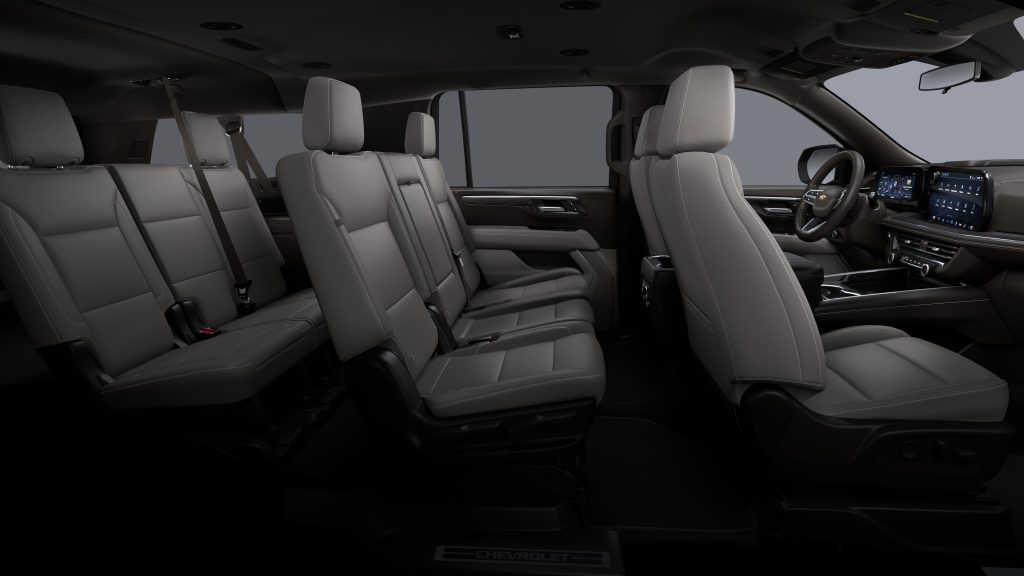
Trim Levels Across the Lineup: Chevrolet Tahoe vs Chevrolet Suburban
Both the Tahoe and Suburban offer several trims designed to fit different lifestyles, from practical daily use to premium comfort and advanced capability. While the features across trims are largely similar, the key difference is how much interior and cargo space you get with each model.
Entry-Level Value: LS
Starting at $60,700 for Tahoe and $63,700 for Suburban, the LS trim is a strong base model. Both come equipped with a 5.3L EcoTec3 V8 engine paired with a 10-speed automatic transmission, plus essential tech such as a massive 17.7-inch touchscreen and an 11-inch Driver Information Center.
You’ll also get advanced safety features such as Adaptive Cruise Control and HD Surround Vision, making both SUVs a smart and capable starting point. The main difference is that the Suburban delivers noticeably more cargo space behind the third row.
Added Comfort & Convenience: LT
Stepping up to the LT (starting at $63,700 for the Tahoe and $66,700 for the Suburban) adds everyday comfort features like leather-appointed seating, heated front seats, and wireless phone charging.
You’ll also have access to available Super Cruise® hands-free driving technology and a programmable power liftgate, features that make loading cargo and long-distance driving easier in both SUVs.
Sporty Style: RST
The RST trim (starting at $68,700 for the Tahoe and $71,700 for the Suburban) features a bold, street-inspired design with blacked-out exterior accents and unique interior stitching.
While performance and tech are similar, this trim is ideal for those who want a more aggressive look without sacrificing practicality. If cargo space is a priority, the Suburban RST continues to offer a clear advantage thanks to its extended length.
Off-Road Capability: Z71
For adventure seekers, the Z71 trim (starting at $70,700 for Tahoe and $73,700 for Suburban) is built for off-road performance. Features like skid plates, red recovery hooks, and an advanced four-wheel-drive system help you tackle rough terrain with confidence.
Even in this rugged configuration, the Suburban still provides more usable cargo room, making it perfect for hauling gear on camping trips or outdoor excursions.
Premium Features: Premier
The Premier trim (starting at $75,600 for Tahoe and $78,600 for Suburban) focuses on luxury and convenience. Highlights include ventilated front seats, heated second-row seating, a premium Bose® sound system, and enhanced lighting elements.
Both SUVs feel upscale at this level, but if you need maximum passenger and cargo flexibility, you’ll appreciate the extra room in the Suburban.
Top-Tier Luxury: High Country
At the top of the lineup, the High Country trim (starting at $80,700 for Tahoe and $83,700 for Suburban) delivers the ultimate driving experience. A powerful 6.2L V8 engine, Magnetic Ride Control, and high-end interior materials elevate both SUVs to a premium level.
Advanced features like a Head-Up Display and Rear Camera Mirror further enhance convenience, but once again, the Suburban stands out for offering the most cargo capacity in the lineup.
Tahoe vs Suburban: Trim Differences That Impact Cargo Space
No matter which trim you choose, both SUVs offer similar technology, safety, and performance features. However, the biggest difference remains consistent across the lineup:
- The Tahoe is smaller, making it easier to maneuver and park. It’s a great choice for daily driving.
- The Suburban provides significantly more cargo space, especially behind the third row, making it perfect for larger families and long trips.
If maximizing storage is your top priority, the Suburban is hard to beat. But if you want a balance of space and drivability, the Tahoe might be the right SUV for you.
Find the Right SUV for Your Cargo Needs at Legacy Chevy
Choosing between the Chevrolet Tahoe and the Chevrolet Suburban ultimately comes down to how much space you truly need. Both SUVs deliver impressive performance, advanced technology, and a wide range of trims to match your lifestyle, but when it comes to maximum cargo capacity, the Suburban clearly takes the lead with its extended length and added storage behind the third row.
That said, the Tahoe remains an excellent option for drivers who want strong capability and interior versatility in a slightly more manageable size. Whether you’re navigating daily errands or planning your next family road trip around Greenwood, either SUV offers the comfort and reliability you expect from Chevrolet.
If you’re still deciding which model is right for you, we recommend checking them out side by side. Visit Legacy Chevy in Greenwood, SC, to explore both models in person, compare cargo space firsthand, and find the SUV that fits your needs perfectly!
Connect with us


- July 2026
- June 2026
- May 2026
- April 2026
- March 2026
- February 2026
- January 2026
- December 2025
- November 2025
- October 2025
- September 2025
- August 2025
- July 2025
- June 2025
- May 2025
- April 2025
- March 2025
- February 2025
- January 2025
- December 2024
- November 2024
- October 2024
- September 2024
- August 2024
- July 2024
- June 2024
- May 2024
- April 2024
- March 2024
- February 2024
- January 2024
- December 2023
- November 2023
- October 2023
- September 2023
- August 2023
- July 2023
- June 2023
- May 2023
- April 2023
- March 2023
- February 2023
- January 2023
- December 2022
- November 2022
Archives
- 2022 Chevrolet Silverado 1500
- 2023 Chevrolet Tahoe
- 2023 Chevy Blazer
- 2023 Chevy Tahoe
- 2024 Blazer EV
- 2024 Camaro
- 2024 Chevrolet Camaro
- 2024 Chevrolet Corvette Z06
- 2024 Chevy Blazer
- 2024 Chevy Colorado
- 2024 Chevy Colorado ZR2 Bison
- 2024 Chevy Equinox EV
- 2024 Chevy Silverado
- 2024 Chevy Silverado EV
- 2024 Chevy Suburban
- 2024 Chevy Tahoe
- 2024 Chevy Trailblazer
- 2024 Chevy Traverse
- 2024 Chevy Traverse Trims
- 2024 Chevy Trax
- 2024 Corvette E-Ray
- 2024 Equinox EV
- 2024 Trax
- 2025 Chevrolet Camaro Convertible
- 2025 Chevrolet Equinox
- 2025 Chevy Blazer
- 2025 Chevy Colorado
- 2025 Chevy Equinox
- 2025 Chevy Malibu
- 2025 Chevy Silverado EV
- 2025 Chevy Suburban
- 2025 Chevy Tahoe
- 2025 Chevy Trax
- 2025 EV Lineup
- 2026 Chevrolet Traverse
- 2026 Chevrolet Trax
- 2026 Chevy Colorado
- 2026 Chevy Equinox
- 2026 Chevy Equinox Trims
- 2026 Chevy Silverado MPG
- 2026 Chevy Tahoe Trim
- 2026 Corvette Interior
- 2026 Corvette Stingray
- 2026 Corvette ZR1X
- 2026 Silverado EV
- 2026 Silverado EV Trail Boss
- 2026 Suburban
- 2026 Traverse
- 2027 Chevy Bolt
- 2027 Chevy Equinox
- Body Shop
- Brake Service
- Car Battery
- Certified Pre-Owned
- Check Engine Light
- Chevrolet Blazer
- Chevrolet EV
- Chevrolet Silverado EV
- Chevrolet Silverado HD ZR2
- Chevrolet SUV
- Chevy Colorado
- Chevy Diesel Trucks
- Chevy Equinox
- Chevy EV
- Chevy Silverado
- Chevy Silverado 1500
- Chevy Silverado Maintenance Guide
- Chevy Suburban
- Chevy Super Cruise
- Chevy Tahoe
- Chevy Trailblazer vs. Chevy Trax
- Electric Vehicles
- First-Time Car Buyers
- New Inventory
- Oil Change
- Parts
- Pre-Owned Inventory
- Quality Chevrolet Service
- Service
- Social
- Tahoe vs Suburban Compared
- Trail Boss Trim Edition
- Used Car
- Used Cars
- Used Chevrolet Truck
- Winter